Oracle SQL
  • LICENSE

Category Archives: java

Parsing Real-Time SQL Monitor (RTSM) ACTIVE Reports Stored as HTML

Posted on December 6, 2025 by Sayan Malakshinov Posted in java, oracle, RTSM, SQL, statistics, troubleshooting 334 Page views Leave a comment

When you work with a large number of Real-Time SQL Monitor (RTSM) reports in the ACTIVE format (the interactive HTML report with JavaScript), it quickly becomes inconvenient to open them one by one in a browser. Very often you want to load them into the database, store them, index them, and analyze them in bulk.

Some RTSM reports are easy to process — for example, those exported directly from EM often contain a plain XML payload that can be extracted and parsed with XMLTABLE().

But most ACTIVE reports do not store XML directly.
Instead, they embed a base64-encoded and zlib-compressed XML document inside a <report> element.
These reports typically look like this:

<html>
 <head>
  <meta http-equiv="Content-Type" content="text/html; charset=utf-8"/>
  <script ...>
     var version = "19.0.0.0.0";
     ...
  </script>
 </head>
 <body onload="sendXML();">
  <script id="fxtmodel" type="text/xml">
   <!--FXTMODEL-->
   <report db_version="19.0.0.0.0" ... encode="base64" compress="zlib">
     <report_id><![CDATA[/orarep/sqlmonitor/main?...]]></report_id>
       eAHtXXtz2ki2/38+hVZ1a2LvTQwS4pXB1GJDEnYc8ALOJHdrSyVA2GwAYRCOfT/9
       ...
       ffUHVA==
   </report>
   <!--FXTMODEL-->
  </script>
 </body>
</html>

At first glance it’s obvious what needs to be done:

  1. Extract the base64 block
  2. Decode it
  3. Decompress it with zlib
  4. Get the original XML <sql_monitor_report>...</sql_monitor_report>

And indeed — if the database had a built-in zlib decompressor, this would be trivial.

Unfortunately, Oracle does NOT provide a native zlib inflate function.

  • UTL_COMPRESS cannot be used — it expects Oracle’s proprietary LZ container format, not a standard zlib stream.
  • There is no PL/SQL API for raw zlib/DEFLATE decompression.
  • XMLType, DBMS_CRYPTO, XDB APIs also cannot decompress zlib.

Because the RTSM report contains a real zlib stream (zlib header + DEFLATE + Adler-32), Oracle simply cannot decompress it natively.

Solution: use Java stored procedure

The only reliable way to decompress standard zlib inside the database is to use Java.
A minimal working implementation looks like this:

InflaterInputStream inflaterIn = new InflaterInputStream(in);

InflaterInputStream with default constructor expects exactly the same format that RTSM uses.

I created a tiny Java helper ZlibHelper that inflates the BLOB directly into another BLOB.
It lives in the database, requires no external libraries, and works in all Oracle versions that support Java stored procedures.

Source code: https://github.com/xtender/xt_scripts/blob/master/rtsm/parsing/ZlibHelper.sql

PL/SQL API: PKG_RTSM

On top of the Java inflater I wrote a small PL/SQL package that:

  1. Extracts and cleans the base64 block
  2. Decodes it into a BLOB
  3. Calls Java to decompress it
  4. Returns the resulting XML as CLOB
  5. Optionally parses it with XMLTYPE

Package here:
pkg_rtsm.sql
https://github.com/xtender/xt_scripts/blob/master/rtsm/parsing/pkg_rtsm.sql

This allows you to do things like:

  xml:=xmltype(pkg_rtsm.rtsm_html_to_xml(:blob_rtsm));

Or load many reports, store them in a table, and analyze execution statistics across hundreds of SQL executions.

The next part of this series explains how to parse the extracted XML and work with the SQL Monitor data directly: Parsing RTSM(Real-Time SQL Monitor) XML Reports
analysis oracle Real-Time SQL Monitor RTSM

Format SQL or PL/SQL directly in Oracle database

Posted on December 23, 2020 by Sayan Malakshinov Posted in java, oracle, PL/SQL, SQL, SQL*Plus, SQL*PLus tips 3,384 Page views Leave a comment

Obviously we can format/beautify SQL or PL/SQL code using external tools, but sometimes it would be more convenient to format it directly in database, for example if we want to see few different sql_text’s from v$sqlarea. And thanks to Oracle SqlCL and Oracle SQL Developer, we can easily use oracle.dbtools.app.Format function from their Java library dbtools-common.jar, so if you use SqlCL or SQL Developer, you can use the same formatting options.

1. load appropriate java library into Oracle

You may have already installed SQLDeveloper or SqlCL on your database server, just check $ORACLE_HOME/sqldeveloper or $ORACLE_HOME/sqcl directories. If – not, you need to download appropriate SqlCL version that matches your java version in Oracle. For 12.2 – 19.8 you can download latest SqlCL 20.3. In fact we need just dbtools-common.jar from lib directory. I put it into $ORACLE_HOME/sqlcl/lib directory on the server and load it using loadjava:

Continue reading→
beautifier pl/sql formatter sql format SQL*Plus sqlformatter

Android Oracle Client 2.0

Posted on June 28, 2020 by Sayan Malakshinov Posted in Android, java, oracle, SQL 1,847 Page views Leave a comment

I’ve just released new version of my Simple Android Oracle Client.

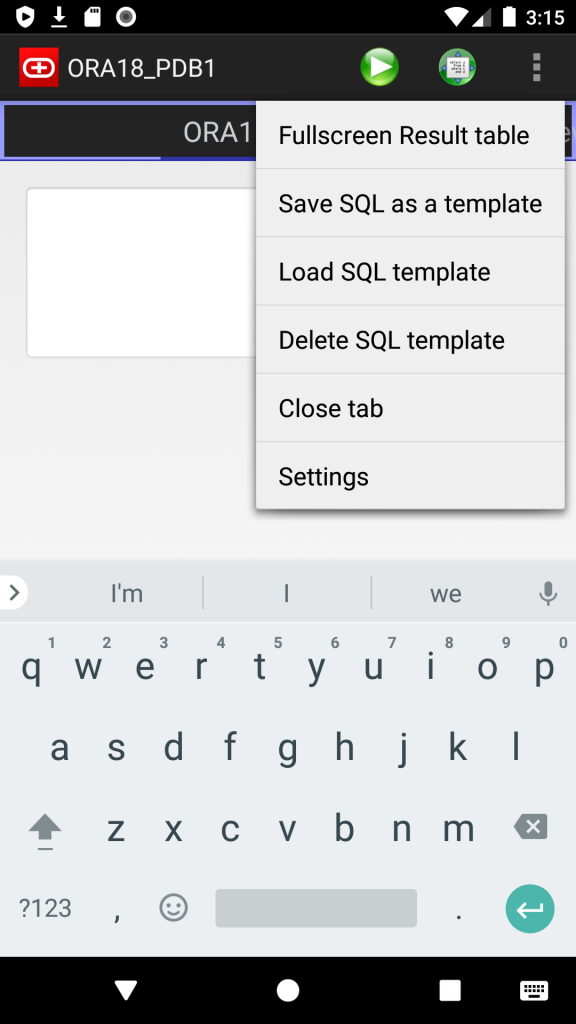
New features:

  • Supported Oracle versions: 11.2, 12.1, 12.2, 18, 19, 20.
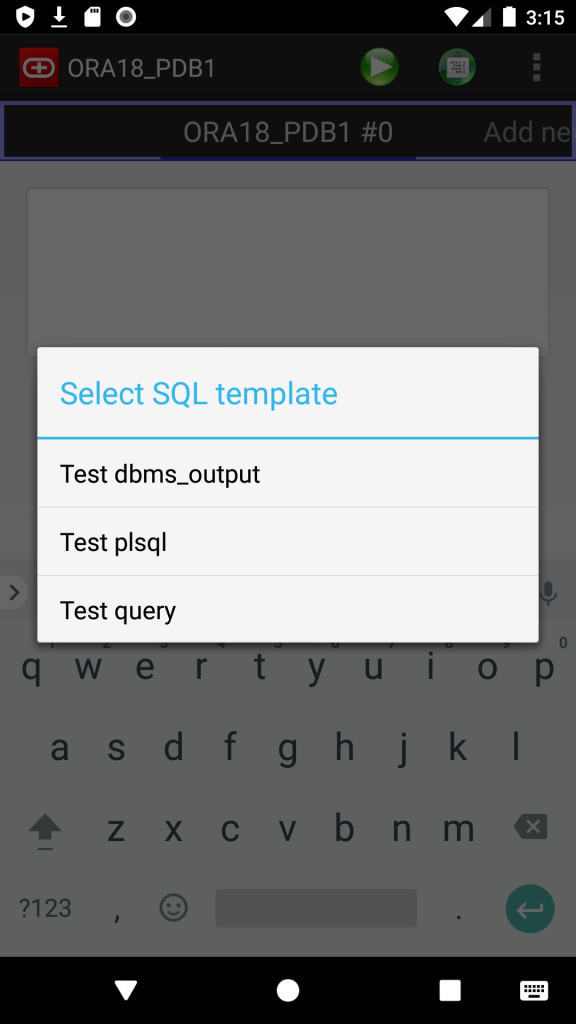
  • SQL Templates: now you can save and load own script templates
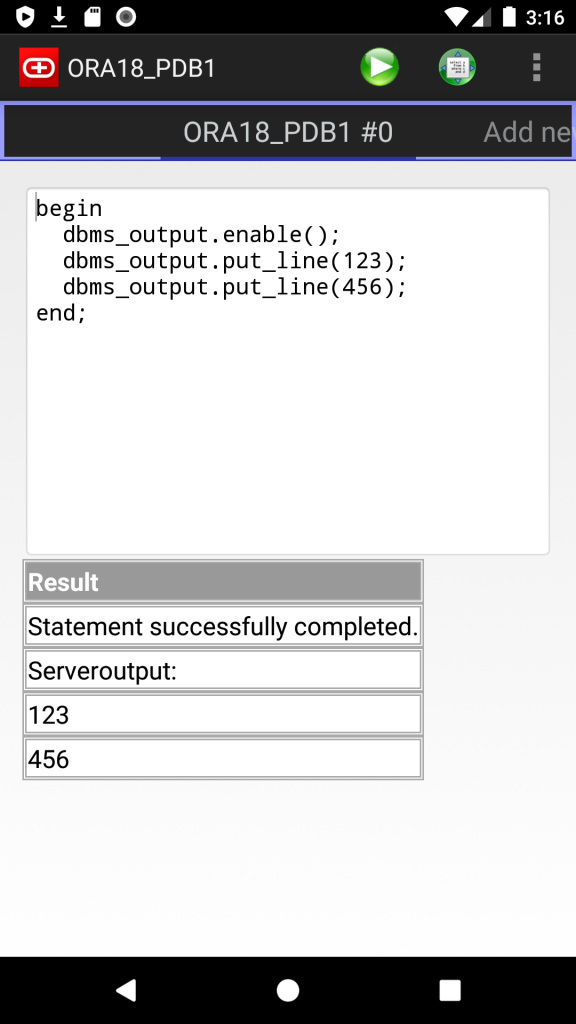
  • Server output (dbms_output)
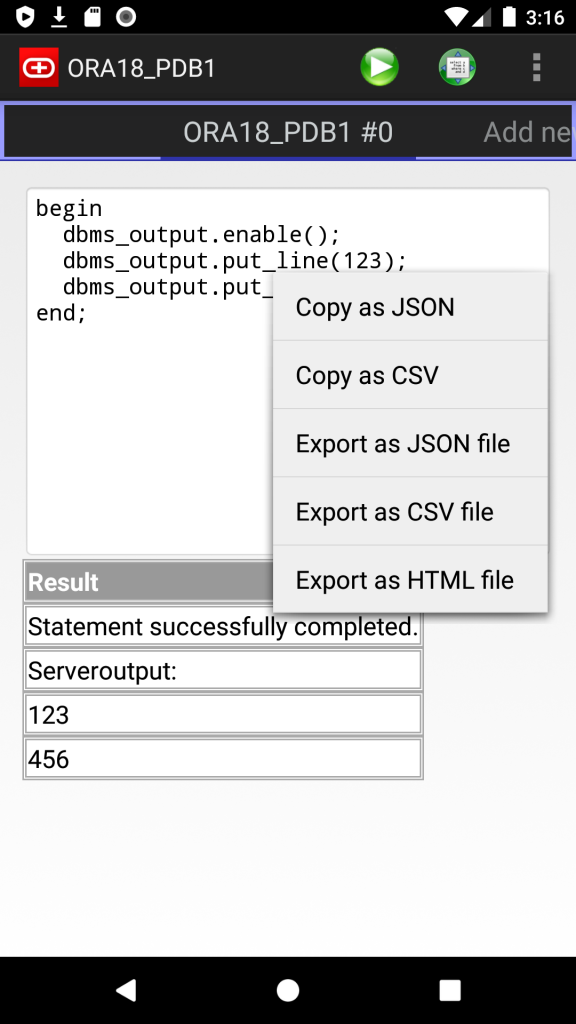
  • Export results as JSON, CSV and HTML files (long tap on results)
  • Copy results to the Clipboard as JSON or CSV

I use it just for basic troubleshooting and small fixes, but, please, let me know if you need anything else.
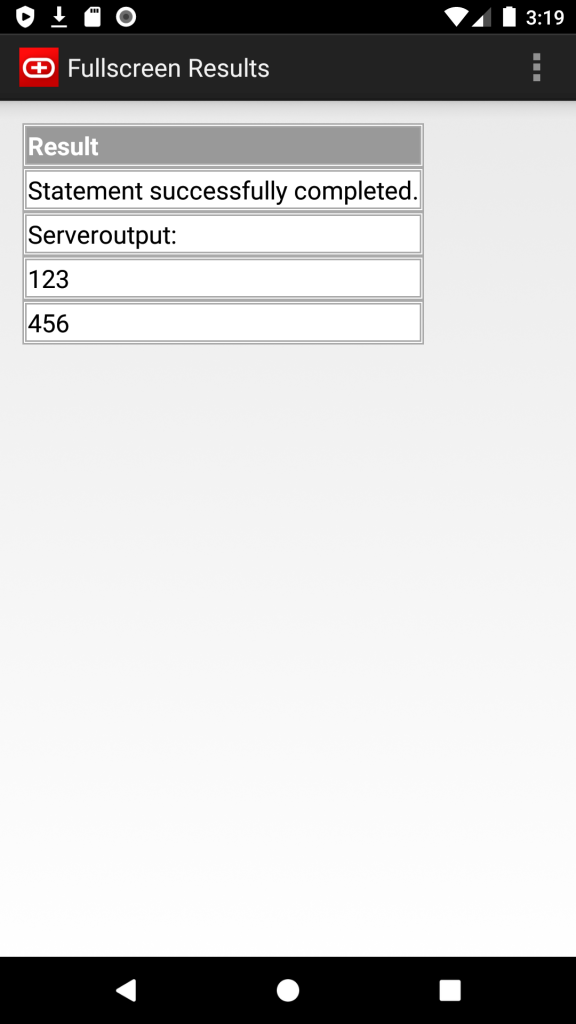
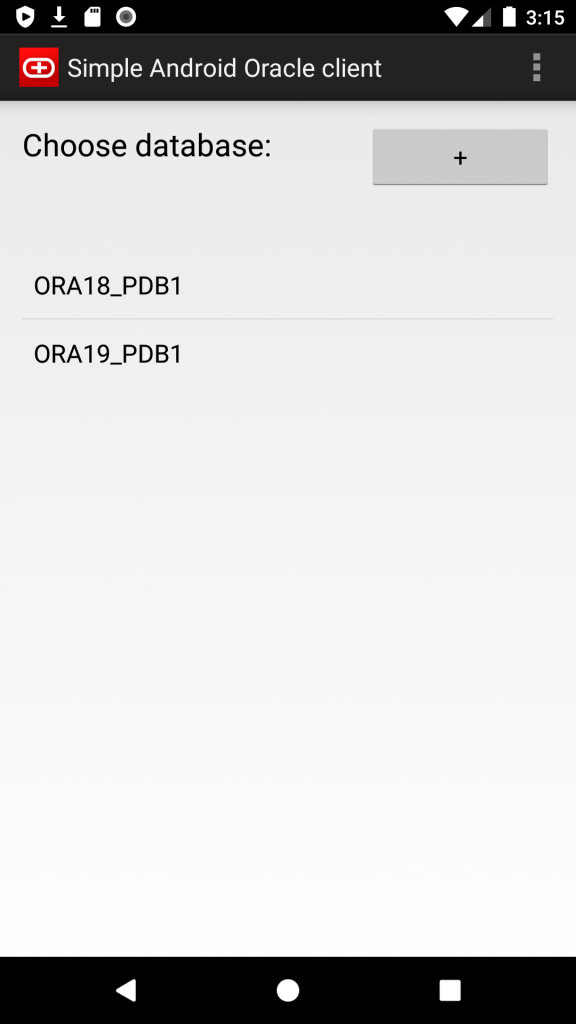
Screenshots:

android android oracle client java oracle client

Maven: how to copy files after a build into several distribution directories

Posted on May 12, 2016 by Sayan Malakshinov Posted in java 3,244 Page views Leave a comment

Sometimes it is convenient to copy jar-files automatically after a build into several different directories, for example if you have different config files for local tests and for office test server, then you may want to copy these files into local test directory, internal office test server and public distribution directory.
This short part of pom.xml contains 2 different methods to build UBER-JAR and copying them into 3 different directories: localtest, officetest and public

    <build>
        <plugins>
            <plugin>
                <artifactId>maven-assembly-plugin</artifactId>
                <version>2.6</version>
                <configuration>
                    <archive>
                        <manifest>
                            <mainClass>tv.tmd.YourMainClass</mainClass>
                        </manifest>
                        <manifestEntries>
                            <Class-Path>.</Class-Path>
                        </manifestEntries>
                    </archive>
                    <descriptorRefs>
                        <descriptorRef>jar-with-dependencies</descriptorRef>
                    </descriptorRefs>
                </configuration>
                <executions>
                    <execution>
                        <id>make-assembly</id>
                        <phase>package</phase>
                        <goals>
                            <goal>single</goal>
                        </goals>
                    </execution>
                </executions>
            </plugin>

            <plugin>
                <groupId>org.apache.maven.plugins</groupId>
                <artifactId>maven-shade-plugin</artifactId>
                <version>2.4.3</version>
                <executions>
                    <execution>
                        <phase>package</phase>
                        <goals>
                            <goal>shade</goal>
                        </goals>
                        <configuration>
                            <transformers>
                                <transformer implementation="org.apache.maven.plugins.shade.resource.ManifestResourceTransformer">
                                    <manifestEntries>
                                        <Main-Class>tv.tmd.YourMainClass</Main-Class>
                                        <Build-Number>2</Build-Number>
                                    </manifestEntries>
                                </transformer>
                            </transformers>
                        </configuration>
                    </execution>
                </executions>
            </plugin>

            <plugin>
                <artifactId>maven-antrun-plugin</artifactId>
                <version>1.8</version>
                <executions>
                    <execution>
                        <id>copy</id>
                        <phase>package</phase>
                        <configuration>
                            <target>
                                <echo>ANT TASK - copying files....</echo>
                                <copy todir="${basedir}/distribution/localtest" overwrite="true" flatten="true">
                                    <fileset dir="${basedir}" includes="*.bat" >
                                        <include name="*.bat" />
                                        <include name="ReadME.*" />
                                        <include name="target/*.jar" />
                                    </fileset>
                                </copy>

                                <copy todir="${basedir}/distribution/officetest" overwrite="true" flatten="true">
                                    <fileset dir="${basedir}" includes="*.bat" >
                                        <include name="*.bat" />
                                        <include name="ReadME.*" />
                                        <include name="target/*.jar" />
                                    </fileset>
                                </copy>

                                <copy todir="${basedir}/distribution/public" overwrite="true" flatten="true">
                                    <fileset dir="${basedir}" includes="*.bat" >
                                        <include name="*.bat" />
                                        <include name="ReadME.*" />
                                        <include name="target/*.jar" />
                                    </fileset>
                                </copy>
                            </target>
                        </configuration>
                        <goals>
                            <goal>run</goal>
                        </goals>
                    </execution>
                </executions>
            </plugin>
        </plugins>
    </build>
java maven maven-antrun-plugin maven-assembly-plugin maven-shade-plugin
Sayan Malakshinov Sayan Malakshinov

Software Development Architect (IC-6), Oracle

Oracle ACE Pro Oracle ACE Pro Alumni

DEVVY Award Oracle DB Developer Choice Award

Oracle performance tuning expert.

UK Global Talent; Fellow of BCS; Professional Member of ACM; Senior Member of IEEE.

United Kingdom / Cambridge

LinkedIn LinkedIn · Twitter Twitter · Twitter Github
sayan@orasql.org

Recent Posts

  • Parsing RTSM(Real-Time SQL Monitor) XML Reports
  • Parsing Real-Time SQL Monitor (RTSM) ACTIVE Reports Stored as HTML
  • Oracle Telegram Bot
  • Partition Pruning and Global Indexes
  • Interval Search: Part 4. Dynamic Range Segmentation – interval quantization

Popular posts

Recent Comments

  • Oracle SQL | Interval Search: Part 4. Dynamic Range Segmentation – interval quantization on Interval Search: Part 3. Dynamic Range Segmentation – Custom Domain Index
  • Oracle SQL | Interval Search: Part 4. Dynamic Range Segmentation – interval quantization on Interval Search: Part 2. Dynamic Range Segmentation – Simplified
  • Oracle SQL | Interval Search: Part 4. Dynamic Range Segmentation – interval quantization on Interval Search: Optimizing Date Range Queries – Part 1
  • Oracle SQL | Interval Search Series: Simplified, Advanced, and Custom Solutions on Interval Search: Part 2. Dynamic Range Segmentation – Simplified
  • Oracle SQL | Interval Search: Part 2. Dynamic Range Segmentation – Simplified on Interval Search: Part 3. Dynamic Range Segmentation – Custom Domain Index

Blogroll

  • Alex Fatkulin
  • Alexander Anokhin
  • Andrey Nikolaev
  • Charles Hooper
  • Christian Antognini
  • Coskan Gundogar
  • David Fitzjarrell
  • Igor Usoltsev
  • Jonathan Lewis
  • Karl Arao
  • Mark Bobak
  • Martin Bach
  • Martin Berger
  • Neil Chandler
  • Randolf Geist
  • Richard Foote
  • Riyaj Shamsudeen
  • Tanel Poder
  • Timur Akhmadeev
  • Valentin Nikotin
©Sayan Malakshinov. Oracle SQL